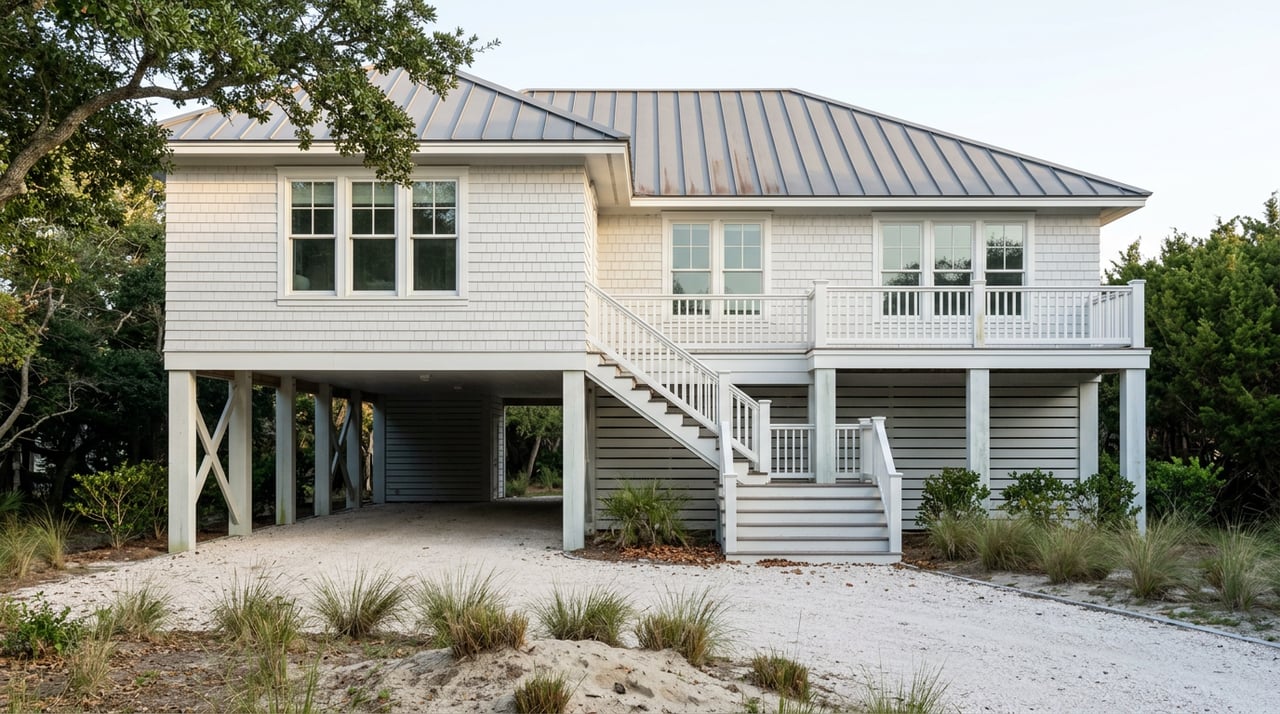
How many people can legally sleep in a four-bedroom house on the Outer Banks? Ask ten buyers and most will answer with math: four bedrooms, two beds each, call it eight to ten guests. It's the wrong math. In Southern Shores, and across the rest of Dare County, the number that actually governs occupancy isn't printed on the listing sheet. It's on a permit filed years ago with the county health department, and it doesn't move just because a house grew.
The Number Buyers Never Ask to See
North Carolina's real estate regulator has been clear about this for years. Occupancy in a home served by a septic system is capped at two people per legal bedroom, and the legal bedroom count comes from the septic permit, not from how many bedrooms the house appears to have. The state's own bulletin on the subject walks through why: local health departments size a septic system to handle wastewater from a fixed number of bedrooms, based on the specific lot's soil and water table, then issue a permit tied to that number. A broker can't advertise a property as sleeping more people than that permit allows, no matter how many beds are in the house.
That distinction matters more in Southern Shores than in most inland markets, because most homes here run on private septic systems rather than municipal sewer. Permits and inspections are handled by Dare County Environmental Health Services, with the nearest office to Southern Shores located in Nags Head. If you're buying a home to use as a vacation rental, the number that caps your revenue potential isn't the bedroom count in the MLS description. It's whatever number is sitting in a file at that Nags Head office.
Why Adding a Bedroom Doesn't Add Capacity
Here's the part that catches people off guard during a transaction. According to Island Contractors, converting a den or bonus room into a bedroom triggers a septic capacity review by the county before the room counts legally.
This isn't a hypothetical for a market like Southern Shores, where a meaningful share of the housing stock predates the current wave of renovations, additions, and reverse floor plan remodels that second-home buyers favor. A house can look like it sleeps twelve and still be legally capped at eight, and nothing about the finished square footage tells you which one you're buying. The only way to know is to pull the permit yourself.
Why a Storm Doesn't Reset the Clock
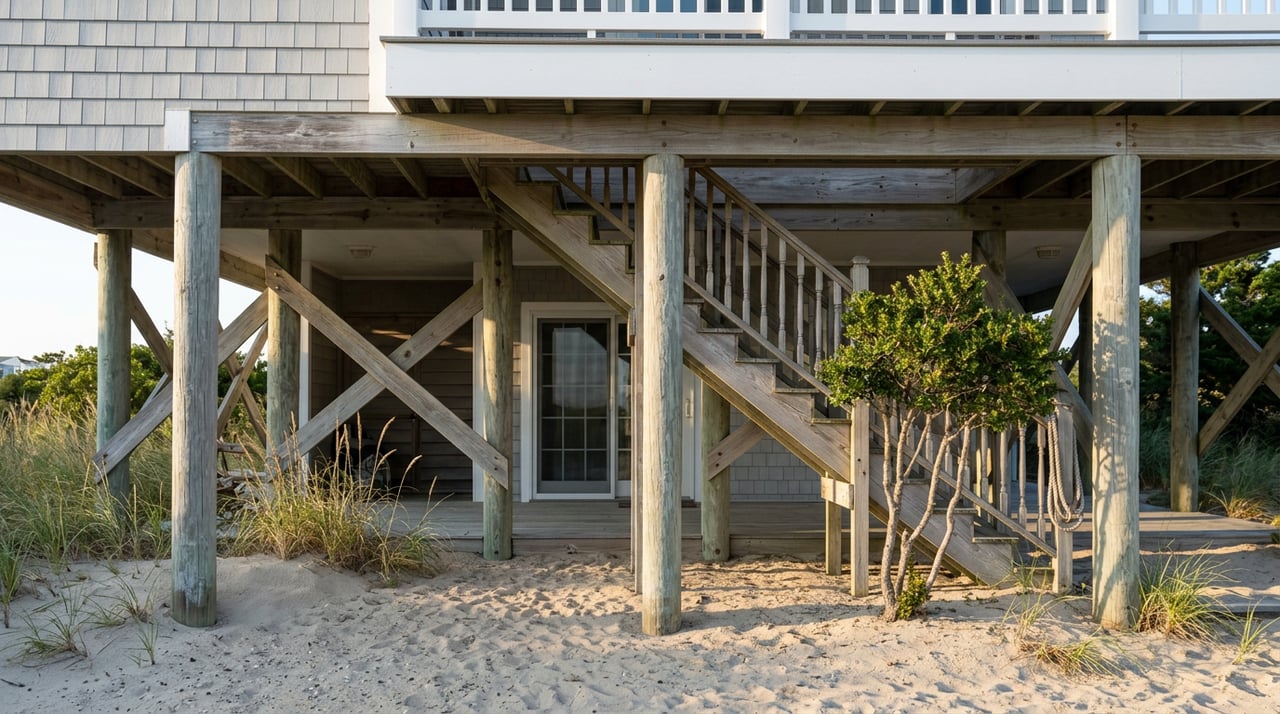
There's a second layer to this that's specific to barrier island geography, and it surfaced in a state-level meeting earlier this year that most buyers will never hear about. At the North Carolina Coastal Resources Commission's February 2026 meeting, officials discussed how septic systems damaged by shoreline erosion actually get handled under current rules. The short version: because septic system damage is evaluated as part of the overall house, not on its own, a storm can overwash a septic tank and drain field almost completely, and the county is still required to permit its repair or replacement as long as the house itself isn't more than half destroyed.
The Outer Banks Voice report on the meeting quoted Dare County Manager Bobby Outten describing homes where the owner's septic tank ends up "on the wet sand beach" while the drain field sits further back; the county has no discretion to deny a rebuild. The system goes back in, permitted at its original bedroom capacity, on a lot that has visibly lost ground to the ocean.
For a buyer, that means a "new" septic system after a storm repair isn't evidence the home's rental capacity has been reassessed for its current, more exposed location. It's evidence the old capacity was reissued. The bedroom cap that mattered when the house was built in a different decade, under different shoreline conditions, is the same cap that applies today.
What This Looks Like in Practice
| Bedrooms on the septic permit | Maximum legal occupancy |
|---|---|
| 2 | 4 people |
| 3 | 6 people |
| 4 | 8 people |
This is the arithmetic a rental-income projection actually runs on. If you're comparing two Southern Shores properties with identical square footage and identical advertised bedroom counts, and one has a permit that matches the listing while the other has a permit that's one bedroom behind, you are not comparing two equivalent investments. You're comparing one property with a revenue ceiling and one without.
Before You Write an Offer
A few steps turn this from a blind spot into a known quantity before closing:
- Request a copy of the septic Improvement Permit and, if one exists, the Operation Permit directly from Dare County Environmental Health Services rather than relying on what the listing states.
- Compare the bedroom count on the permit against the bedroom count advertised in the listing and confirm they match.
- Ask when the home was last renovated or expanded, and whether any addition that created a bedroom went through a septic capacity review at the time.
- If the lot sits close to an eroding shoreline, ask directly whether the septic system has ever been repaired or replaced after storm damage, and treat a "new system" as confirmation of the old capacity, not an upgrade.
- If you can't locate the original permit, the county health department can typically make a capacity determination based on a new site evaluation, though this takes time and should be built into your due diligence window.
None of this shows up on a walkthrough. It shows up in a filing cabinet in Nags Head, and it's worth the phone call before the number you're relying on for rental projections turns out to be someone else's guess.
FAQ
What if the septic permit can't be found? Dare County Environmental Health Services can typically make a capacity determination through a new site evaluation if the original permit isn't on file, though this adds time to a transaction and is worth requesting early rather than at the closing table.
Does a storm-related septic repair bring the system up to current standards? Not automatically. Under the rules discussed at the February 2026 Coastal Resources Commission meeting, a septic system tied to a house that isn't more than half destroyed is typically repaired or replaced at its original design capacity, even if the surrounding shoreline has changed significantly since the system was first installed.
If you're weighing a Southern Shores property for its rental potential, or preparing your own home for sale and want to know exactly what your paperwork says before a buyer's agent finds out first, Melissa Morgan can help you get the right records in hand before you're negotiating around them. Let's Connect.
This article is general information, not legal, tax or financial advice. Consult a qualified professional about your situation.