Looking for an Outer Banks town where you can slow down, park the car, and enjoy the coast on foot? Duck stands out for exactly that reason. If you are exploring a second home, planning a relocation, or simply trying to understand what makes this part of the Outer Banks different, Duck offers a small-scale village setting built around walkability, waterfront access, and independent local businesses. Let’s take a closer look.
Why Duck Feels Different
Duck is Dare County’s northernmost community and the Outer Banks’ newest incorporated town. The town describes itself as a sound-to-sea community, which fits the experience on the ground. Instead of feeling like a long commercial strip, Duck is organized more like a connected coastal village.
That difference matters when you are thinking about lifestyle, not just property. Duck’s vision materials focus on residential neighborhoods, Duck Village, parks, boardwalks, and small businesses as one connected fabric. With a resident population of 686 as of July 2022, it has a notably small-town scale that shapes the pace of daily life.
Walkability Is Part of Daily Life
One of Duck’s biggest draws is that walkability is not just a nice extra. It is part of how the town is designed to work. The town explicitly describes Duck as a pedestrian-first community, with the compact village center serving as the focus of foot traffic.
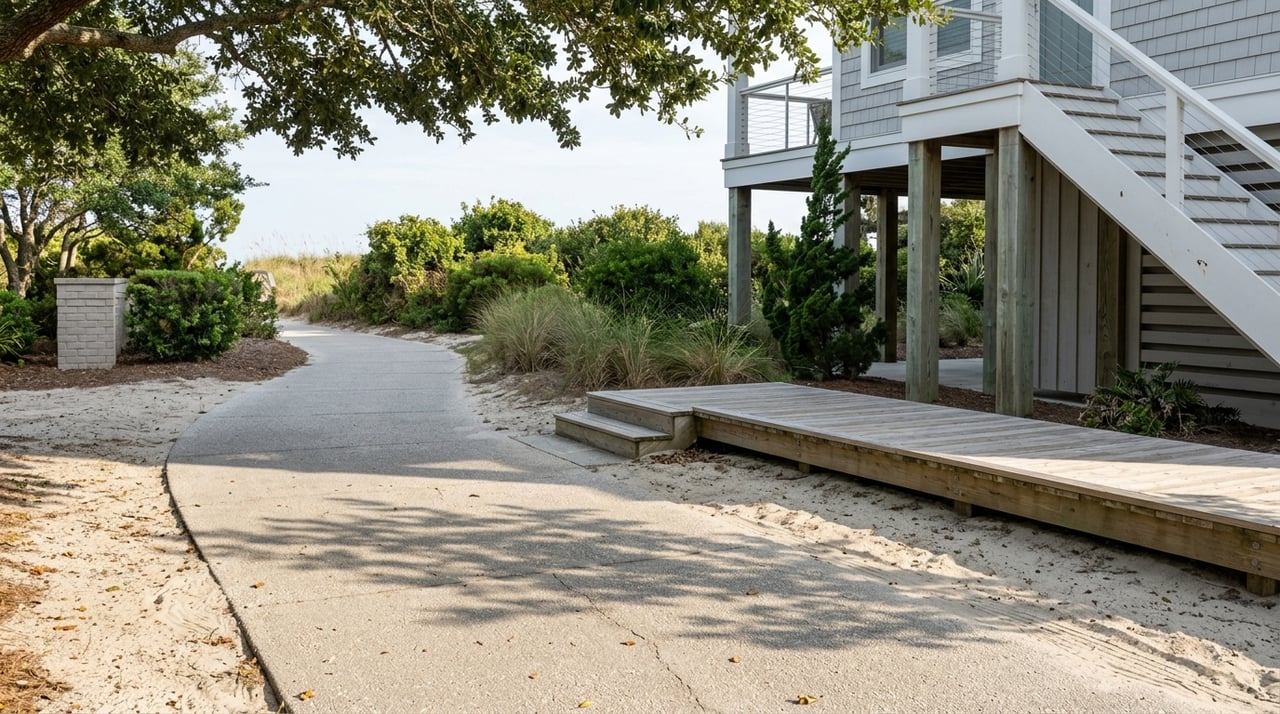
The Duck Trail helps tie that experience together. It is a six-mile multi-use path located primarily on the ocean side of Duck Road, giving you a practical route for walking, biking, and getting around town. In the village commercial area, the town added sidewalks and designated bike lanes on both sides of Duck Road, and the posted speed limit there is 25 mph.
For many people, that means everyday outings can feel easier and more enjoyable. Depending on where you stay or buy, you may be able to walk or bike to the boardwalk, Town Park, shops, restaurants, and seasonal events without making every errand a car trip.
The Boardwalk and Town Park Shape the Lifestyle
If you want to understand life in Duck, start with the boardwalk and Town Park. These are not just amenities on a map. They help define how people spend their time and move through town.
The boardwalk connects the Duck Commercial Village to the soundside Town Park. That gives the village a natural flow between dining, shopping, public gathering space, and soundfront scenery.
Town Park adds even more to the daily rhythm. According to the town, the park includes an amphitheater, gazebo, kayak and canoe launch, four-slip boat pier, picnic shelter, playground, and walking trails through a maritime forest setting.
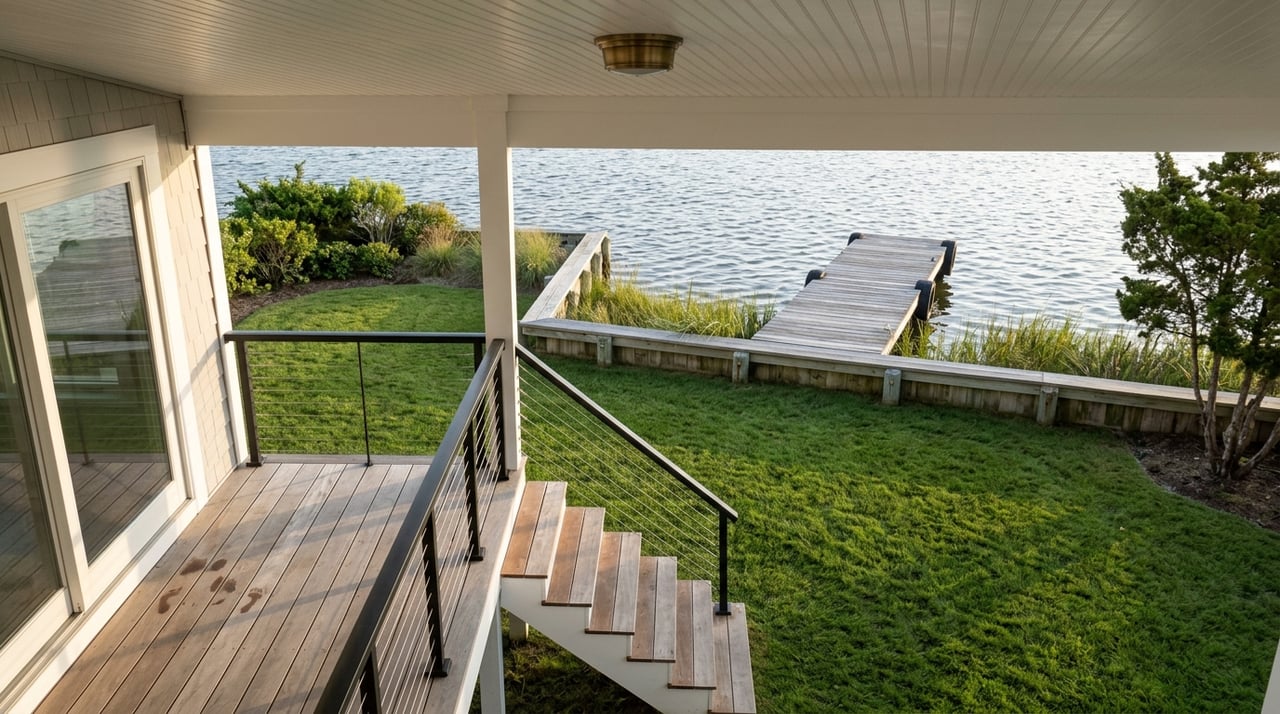
Duck also provides sound access in Town Park and at day-use boat piers at the north and south ends of the boardwalk. At the same time, the town notes that Duck does not have municipally owned beach accesses or soundside beaches. That is a useful detail if you are comparing how different Outer Banks towns function day to day.
Duck Village Has a Boutique Coastal Feel
Duck’s commercial core is intentionally small-scale, and that is a major part of its appeal. The town describes Duck Village as the heart of Duck and highlights its mix of independent businesses. For you, that often translates into a more relaxed experience centered on browsing, dining, and lingering rather than rushing through a large retail area.
The business mix includes restaurants, coffee spots, boutiques, galleries, outfitters, and specialty stores. Town materials highlight names such as Aqua Restaurant and Spa, Red Sky Casual Dining, The Village Table & Tavern, Sweet T’s Coffee Beer & Wine, Duck’s Cottage Coffee and Books, Duck’s General Store, Duck Village Outfitters, Duck Toy & Ice Cream, Salty Skies Boutique, and The Duck Gallery.
The layout also reinforces the village feel. Many businesses are grouped in clusters like Waterfront Shops, Scarborough Lane Shoppes, Scarborough Faire, Wee Winks Square, and Osprey Landing. That setup helps make an afternoon in Duck feel more like strolling through connected pockets of activity than navigating a sprawling commercial corridor.
Seasonal Events Keep the Town Active
Duck’s appeal is not limited to scenery and shopping. The town also supports a strong lineup of recurring events that make public spaces feel active and welcoming, especially during the busier seasons.
The town’s event programming includes Yoga on the Green, Thursday evening Concert on the Green performances, family music, children’s events in the amphitheater, rotating art shows, movie nights, and the annual Duck Jazz Festival. The jazz festival is free and non-ticketed, and the town notes that it extends into promotions and events at local businesses around town.
For buyers considering a second home or relocation, this kind of calendar says a lot. It suggests that Duck is not just visually appealing. It also offers a shared community rhythm built around outdoor gathering spaces and local traditions.
What Duck Is Like Year Round
Duck has a small permanent population, but it also has a strong seasonal-resort identity. That combination is part of what makes the town distinctive. You get a real local core, along with a seasonal energy that supports shops, restaurants, and events.
If you are considering buying here, that mix can shape how the town feels in different months. Some parts of the year are more active and event-driven, while others feel quieter and more residential. For many buyers, that balance is a key part of Duck’s charm.
Why Buyers Are Drawn to Duck
Duck tends to appeal to people who care as much about atmosphere as they do about the home itself. The town’s own planning language points to a coastal residential style and scale that creates an energetic and walkable experience, while also aiming to preserve Duck’s unique character and environment.
That matters if you are searching for an Outer Banks property that supports a certain way of living. You may be looking for a second home where mornings start with a walk on the trail, afternoons include time in the village, and evenings end with a soundfront sunset or community event.
For relocating buyers or hybrid households, Duck can also be appealing because the setting feels compact and intentional. The ability to move through town on foot or by bike, enjoy public gathering spaces, and stay connected to the waterfront can be just as important as square footage or lot size.
What Sellers Should Know About Duck’s Appeal
If you own property in Duck, the town’s identity is a meaningful part of your home’s market story. Buyers are often responding to more than bedrooms, decks, or finishes. They are also responding to Duck’s walkable layout, boardwalk access, village-scale shopping, and overall atmosphere.
That means presentation and positioning matter. A home that is framed clearly within the Duck lifestyle story can help buyers understand the value of location, convenience, and setting. In a town where character and scale are central to the experience, context can be just as important as features.
Duck Compared With Busier OBX Areas
Every Outer Banks town offers a different feel, and Duck is best understood on its own terms. Based on the town’s planning vision and pedestrian guidance, Duck is oriented around compact scale, pedestrian-first circulation, soundfront public space, and carefully preserved village character.
That makes it a useful option for buyers who want a more intimate and boutique-style coastal experience. If you prefer a place where walking, biking, independent businesses, and public gathering spaces play a central role, Duck offers a different rhythm than a higher-traffic retail hub.
Is Duck the Right Fit for You?
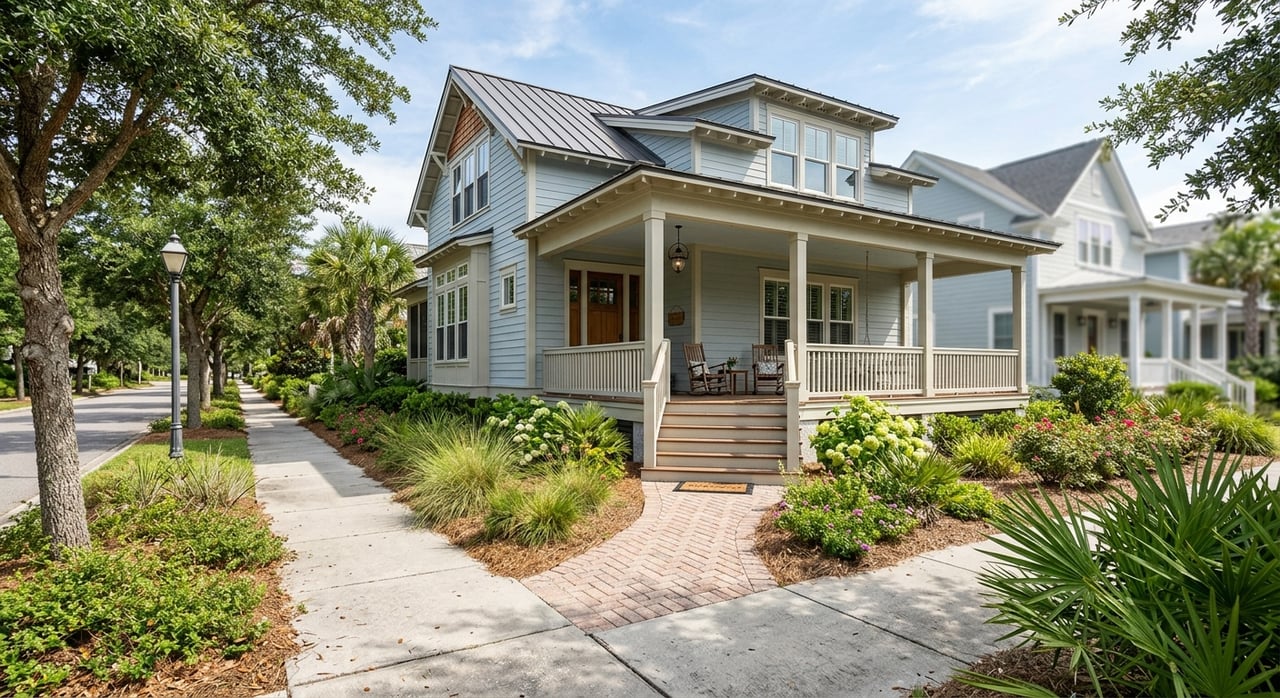
If you are drawn to a low-rise coastal village with a walkable center, strong local identity, and easy access to public spaces, Duck is worth a serious look. It offers a lifestyle that feels connected, scenic, and intentionally small-scale.
Whether you are buying a second home, exploring a future move, or preparing to sell in this part of the Outer Banks, local context matters. Understanding how Duck lives day to day can help you make a more confident decision. If you want clear, practical guidance on Duck and the wider Outer Banks market, Melissa Morgan is here to help.
FAQs
Can you walk to shops and restaurants in Duck, NC?
- Yes. The town describes Duck as a pedestrian-first community, with a compact village center, sidewalks, bike lanes in the commercial area, and the six-mile Duck Trail supporting travel on foot or by bike.
What makes Duck, NC feel different from other Outer Banks towns?
- Duck is known for its compact village scale, walkable layout, soundfront boardwalk, Town Park, and mix of independent businesses rather than a sprawling commercial corridor.
Does Duck, NC have a boardwalk?
- Yes. The boardwalk connects the Duck Commercial Village to the soundside Town Park and is a central part of the town’s public waterfront experience.
What amenities are in Duck Town Park?
- Town Park includes an amphitheater, gazebo, kayak and canoe launch, four-slip boat pier, picnic shelter, playground, and walking trails through a maritime forest setting.
Is Duck, NC a year-round community or a vacation town?
- Duck has a small permanent population and a strong seasonal-resort identity, with recurring events, active local businesses, and a village center that serves both residents and visitors.
Does Duck, NC have public beach access?
- The town states that Duck does not have municipally owned beach accesses or soundside beaches, though it does provide sound access in Town Park and at day-use boat piers near the boardwalk.