If you are thinking about buying in Duck, one simple question can save you a lot of time: what kind of daily life do you want once you get here? In Duck, being close to the ocean, close to the sound, or close to the village center can lead to very different experiences. Understanding those differences can help you narrow your search with more confidence and avoid falling in love with the wrong fit. Let’s dive in.
Why Duck Feels Different by Area
Duck is a barrier-island town, but it does not live like one single, uniform beach market. The town center is shaped by the soundside boardwalk, Town Park, and a pedestrian-focused layout, while oceanfront and soundside neighborhoods offer distinct rhythms and tradeoffs.
The town describes Duck as a pedestrian-first community with a six-mile Duck Trail, a soundside boardwalk, and private rather than public beach access. That means your day-to-day experience can change a lot depending on whether you want direct beach orientation, quieter residential surroundings, or the easiest walk to shops, dining, and town events.
Oceanfront in Duck
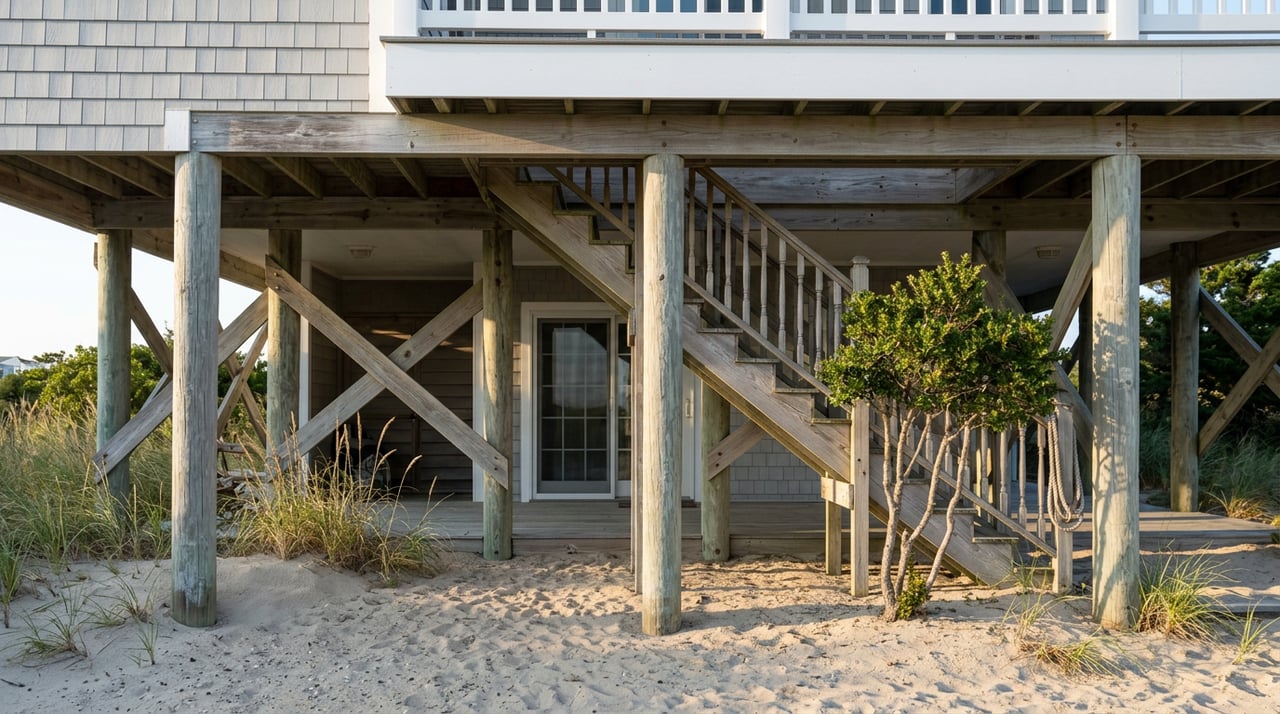
For many buyers, oceanfront is the most recognizable Duck lifestyle. If your priority is waking up close to the beach and centering your time around the ocean, this is usually the most beach-focused option in town.
Oceanfront property in Duck also comes with the most direct coastal considerations. The town says projects on an oceanfront lot, or between the street and the ocean beach, are likely in an Area of Environmental Concern under CAMA, especially near the frontal and primary dune system.
That matters because buying oceanfront is not just about the view. It is also about understanding permitting, setback context, flood exposure, and how a specific lot relates to the dune system.
Beach Access in Oceanfront Areas
One detail surprises many out-of-town buyers: Duck does not own or maintain public beach access locations, and there are no public parking areas at beach accesses. Access is through privately owned and maintained locations for Duck residents, renters, and their guests.
In practical terms, you will want to verify exactly how a property reaches the beach before you make an offer. In Duck, access should never be assumed just because a home is near the ocean.
Oceanfront Taxes and Project Costs
Oceanfront buyers should also understand Duck’s beach nourishment funding structure. The town says MSD-B applies only to oceanfront properties, while MSD-A covers the broader project area. For FY 2025-26, the listed rates are 0.0798 for MSD-A and 0.1890 for MSD-B.
This does not make oceanfront right or wrong. It simply means oceanfront ownership usually carries the most direct connection to beach-related funding, erosion questions, and property-specific coastal review.
Who Oceanfront Fits Best
Oceanfront tends to fit best if you want:
- Immediate beach orientation
- The strongest ocean-centered lifestyle
- A property that reads clearly as a beach home
- A direct review of CAMA, flood, and access details before moving forward
For many second-home and rental-minded buyers, oceanfront has the clearest beach identity. It can be a compelling choice, but it usually asks for the most careful due diligence.
Soundside in Duck
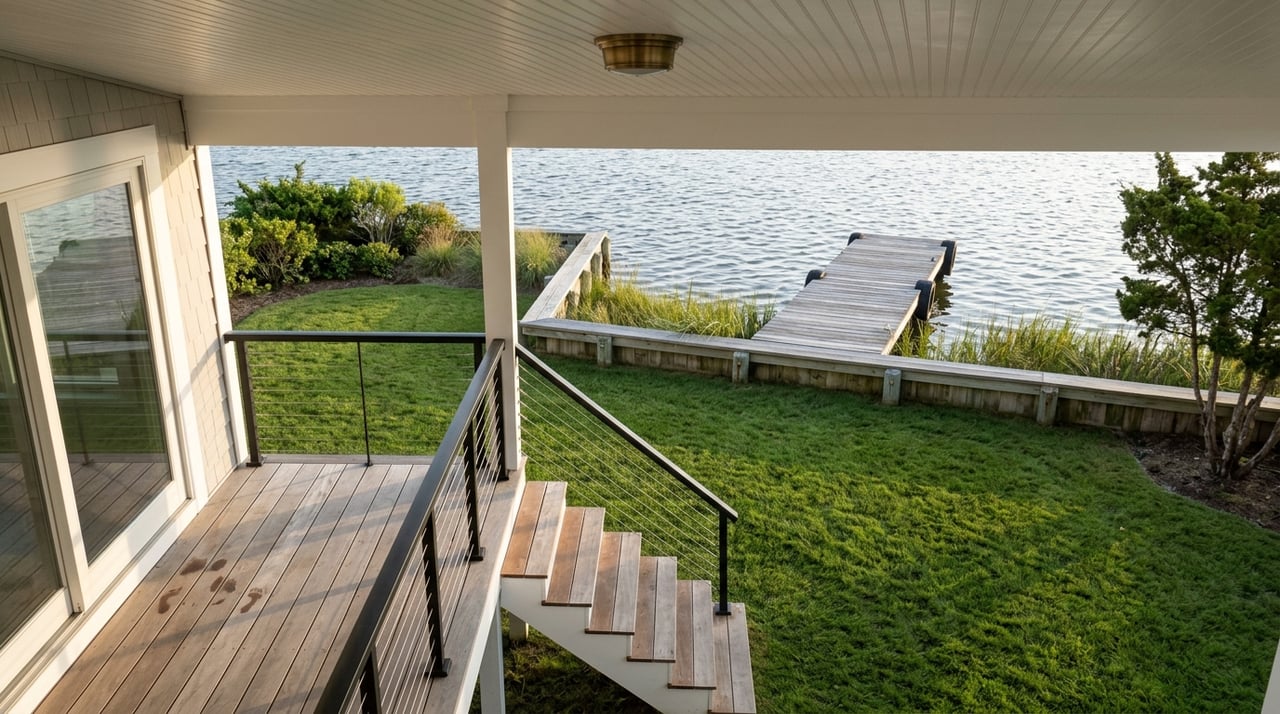
If oceanfront is all about the beach, soundside is often about a calmer water-oriented lifestyle. Many buyers are drawn to soundside areas because they feel more residential and are often closely tied to sunsets, boardwalk access, and the quieter side of town life.
Duck’s public sound access is limited, which is important to know upfront. The town says there are three public sound access points: the Town Park kayak and canoe launch, plus two day-use boat piers at the north and south ends of the boardwalk. The town also says there is no public soundside beach or other public sound access within town limits.
That creates a different kind of waterfront experience. Soundside living in Duck is less about a broad public shoreline and more about proximity to the park, boardwalk, and select launch or pier access points.
Soundside Risk Profile
Duck’s infrastructure vulnerability study says the town has relatively low overall vulnerability compared with many barrier-island communities, but the pattern changes by location. Coastal erosion is identified as the major oceanfront hazard, while flooding and sea-level rise are the main soundside issues.
That is a helpful reminder that flood review matters across Duck, not just near the ocean. The town’s flood page notes that FEMA maps and the local flood ordinance were updated, and the town can provide flood-zone information and elevation certificates.
Why Buyers Choose Soundside
Soundside is often the right fit if you want:
- A quieter residential setting
- Close access to Town Park and the boardwalk
- A less beach-centered daily rhythm
- Water-oriented surroundings without needing to be directly on the ocean
Because Duck’s residential districts generally follow lot-coverage rules that keep much of the town in a neighborhood pattern, soundside areas often appeal to buyers looking for a more settled residential feel. For many people, it is a strong middle ground between lifestyle access and everyday calm.
Village Core in Duck
If your priority is walkability, the village core usually stands out first. The town describes Duck Village as the heart of Duck, and that identity is closely tied to the Town Park, boardwalk, and the concentration of shops, services, and gathering spaces.
The town also describes Duck as a pedestrian-first community, and the compact village center is a major focus of pedestrian travel. In simple terms, this is the part of Duck where you are most likely to feel connected to daily activity.
What Walkability Really Means Here
The village core is the most walkable part of Duck, but it is not a car-free environment. The Duck Trail is six miles long and mostly runs on the east side of Duck Road, while the village commercial area has sidewalks and bike lanes on both sides of the road.
At the same time, the town notes that in the village commercial area, the trail is not separated from traffic. Pedestrians are advised to use crosswalks and stay alert for cars entering and exiting Duck Road.
So yes, the village core is the easiest place to walk to coffee, dinner, events, the park, and the boardwalk. But that convenience comes with a busier, road-adjacent setting.
Why the Village Core Feels Mixed-Use
The village core feels different from surrounding residential areas because it is designed to be different. The town explains that the V-C zoning designation supports limited commercial areas serving existing and emerging residential neighborhoods, with goods and services concentrated along state-maintained highways.
That planning framework helps explain why the village center feels active and convenient compared with quieter nearby neighborhoods. If your ideal Duck day includes walking out for breakfast, browsing shops, and catching an evening event at the park, this area may feel like the best fit.
Who the Village Core Fits Best
The village core often works best if you want:
- The most walkable experience in Duck
- Easy access to shops and restaurants
- Quick connection to Town Park and the boardwalk
- A more active, mixed-use setting
Buyers who value privacy or a larger yard may lean elsewhere. Buyers who want convenience and connection often start here.
A Simple Way to Compare Duck Areas
Here is the clearest way to think about the three areas.
| Area | Best For | Key Considerations |
|---|---|---|
| Oceanfront | Direct beach lifestyle | CAMA review, flood context, private beach access, oceanfront tax district questions |
| Soundside | Quiet residential water-oriented living | Flood and elevation review, limited public sound access |
| Village Core | Walkability and town convenience | Busier road environment, mixed-use surroundings |
None of these choices is universally better. The right area depends on how you plan to use the home, what kind of access matters most, and how you weigh convenience against privacy and coastal conditions.
What to Verify Before You Buy in Duck
No matter which part of Duck interests you most, a few property-level checks matter almost every time. The town’s planning, flood, and access tools make these worth reviewing early in your search.
Before making an offer, be sure to verify:
- Beach access or HOA access details
- Flood zone information
- Elevation certificate availability
- Zoning district
- Lot coverage limits where relevant
- Whether an oceanfront parcel falls in MSD-B
- Whether CAMA review may affect future projects
This is where local guidance can make a real difference. In a place like Duck, two homes that seem close together on a map can come with very different access patterns, zoning context, and long-term ownership considerations.
How to Choose the Right Duck Fit
If your top goal is beach-first living, start with oceanfront. If you want a more residential feel with soundside amenities and easier access to the boardwalk and park, soundside may be the better match. If you care most about walking to the places that shape everyday life in Duck, the village core deserves a close look.
The best decision usually comes from matching the home to your routine, not just the photos. When you understand how each part of Duck lives day to day, your search gets clearer and your choices get smarter.
If you want help narrowing the right area, comparing specific homes, or understanding how location changes value and lifestyle in Duck, Melissa Morgan can help you sort through the details with practical Outer Banks guidance.
FAQs
What is the main difference between oceanfront, soundside, and village core living in Duck?
- Oceanfront is the most beach-centered, soundside is typically quieter and more residential, and the village core is the most walkable and mixed-use.
What should buyers know about beach access in Duck oceanfront areas?
- Duck does not own or maintain public beach access locations, and there are no public parking areas at beach accesses, so you should verify the specific access tied to any property you are considering.
What should buyers know about flood zones in Duck?
- Flood and elevation review matter throughout Duck, not just on the oceanfront, and the town can provide flood-zone information and elevation certificates.
What makes the village core of Duck more walkable than other areas?
- The village commercial area has sidewalks and bike lanes on both sides of Duck Road, plus close access to Town Park and the boardwalk, which makes it the easiest part of Duck for walking to daily destinations.
What is important to verify before buying a home in any part of Duck?
- You should confirm beach or HOA access, flood zone, elevation certificate, zoning district, and for some oceanfront properties, whether the parcel falls in MSD-B.